
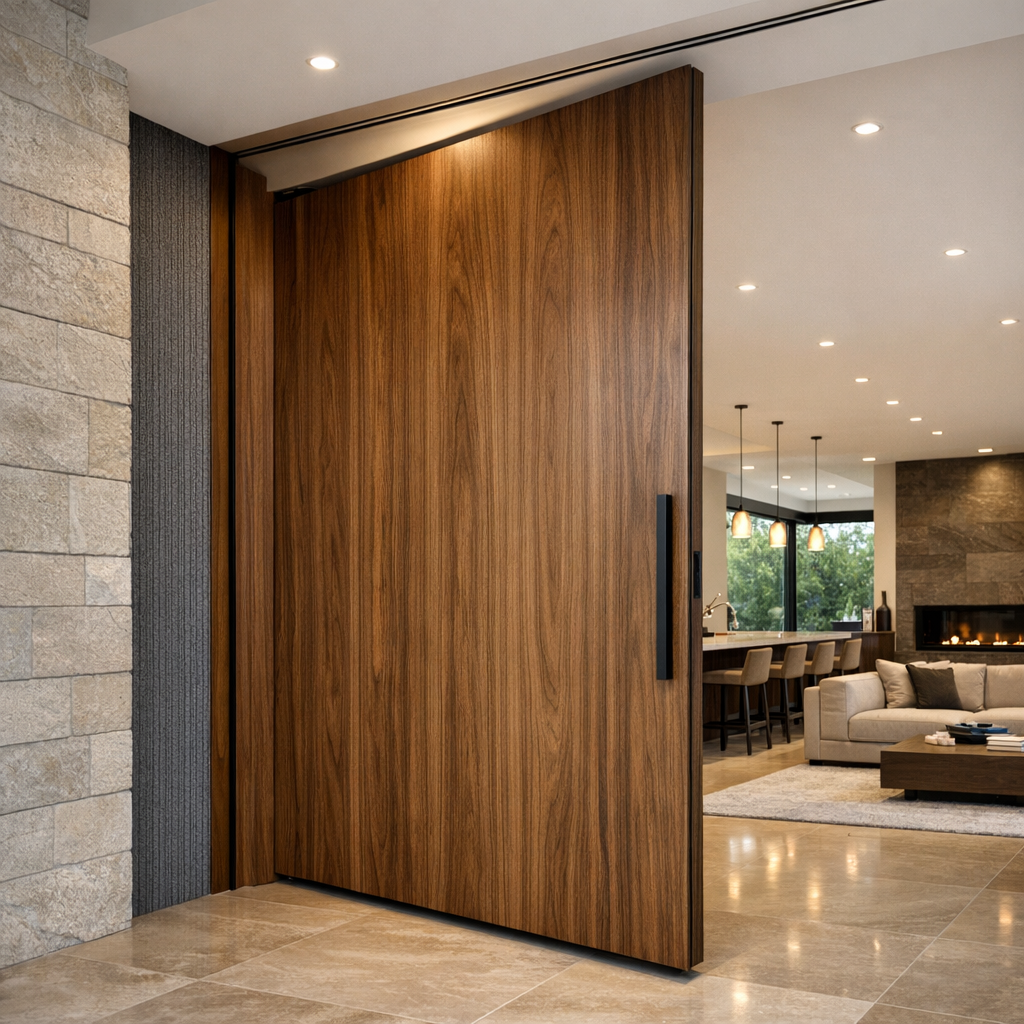
In contemporary American architecture, the rise of open-plan layouts has been both a blessing and a challenge. While these designs foster fluidity and natural light, they often compromise acoustic privacy. Interior pivot doors have emerged as an innovative architectural feature that addresses this challenge without detracting from modern aesthetics. This article delves into how pivot doors can be strategically integrated to create serene, acoustically comfortable spaces within luxury homes.
Understanding Acoustic Challenges in Open-Plan Designs
Open-plan interiors blur boundaries between living areas, kitchens, and offices, facilitating interaction and openness. However, sound easily travels across these spaces, making it difficult to maintain privacy or quiet. Unlike traditional hinged doors, which can sometimes seal spaces effectively, pivot doors offer unique design advantages but pose different considerations for sound control.
The Acoustic Gap Problem
One common acoustic issue is the gap between the door panel and frame. Interior pivot doors rotate on a central axis rather than hinge from the side, often leading to wider clearances necessary for smooth operation. Without proper sealing, these gaps allow sound infiltration, diminishing acoustic privacy.
Design Strategies for Acoustic Efficiency with Pivot Doors
To harness the architectural appeal of pivot doors without sacrificing sound control, several design and technical strategies can be employed:
- Precision Engineering of Pivot Hardware: High-quality pivot mechanisms enable tighter tolerances between door and frame, minimizing acoustic leakage.
- Acoustic Seals and Gaskets: Installing flexible seals around the door perimeter significantly reduces noise transfer. Specialized seals can be designed to complement the clean lines of pivot systems.
- Material Selection: Solid, denser door materials such as hardwoods or layered composites absorb and block sound more effectively than hollow core counterparts.
- Threshold Design: Incorporating drop seals or tight floor sweeps at the bottom pivot point helps seal the lower portion where sound often escapes.
Examples of Acoustic Pivot Door Applications
Luxury homeowners and architects often reserve interior pivot doors for distinctive rooms requiring both privacy and a design statement. Some common applications include:
- Home Offices: Pivot doors create a distinct enclosure that limits noise without losing spatial drama.
- Media Rooms: Enhanced acoustic sealing maintains sound clarity and prevents disturbances elsewhere.
- Bedrooms and Master Suites: Pivot doors balance privacy needs with panoramic integration with the rest of the interior.
In each case, collaboration between architects and door specialists ensures that acoustic properties align with spatial intentions.
Balancing Aesthetic and Acoustic Trade-Offs
Though acoustic seals enhance sound insulation, they can potentially affect the smooth pivot action or interfere with minimalistic aesthetics. Designers must carefully select hardware that supports integrated seals or concealment without compromising operation.
Another consideration is door thickness. Thicker pivot doors improve soundproofing but add weight, requiring reinforced pivot hinges and frames. Balancing these aspects ensures a seamless user experience.
Contemporary Inspirations: Exploring Dayoris Architectural Doors
For architects and homeowners looking to explore premium examples of pivot door integration with sound-conscious design, DAYORIS offers valuable inspiration. As specialists in architectural interior doors, their portfolio highlights how thoughtfully crafted pivot systems can align luxurious materials and acoustic performance.
Installation Insights from InteriorPivotDoor.com
Accurate installation is critical to achieving intended acoustic benefits. For practical guidance and expert technical resources, InteriorPivotDoor.com’s pivot door section is a trusted source. Their expertise ensures that custom pivot doors not only captivate visually but also function optimally in sound isolation.
Conclusion: Acoustic Pivot Doors as a Design Solution
In the evolving landscape of luxury interior architecture, pivot doors represent more than aesthetic innovation. When thoughtfully specified and installed, they offer a compelling solution to the acoustic challenges posed by open-plan living. Homeowners and design professionals must weigh material choices, hardware precision, and sealing techniques to fully leverage pivot doors’ potential for acoustic privacy.
In doing so, interiors achieve the dual goal of openness and tranquility, enhancing everyday comfort without compromising contemporary design ideals.
FAQ
Do pivot doors provide better or worse sound insulation than traditional hinged doors?
Pivot doors can match or even exceed hinged doors in sound insulation if engineered with quality seals and dense materials. However, the inherent design creates potential gaps that require specific solutions.
Can acoustic seals be added to existing pivot doors?
Yes, acoustic seals and gaskets can often be retrofitted on pivot doors, though professional assessment is recommended to maintain door operation integrity.
Where can I find premium pivot door designs with acoustic considerations?
Exploring resources like DAYORIS and InteriorPivotDoor.com offers inspiration and technical insights tailored to luxury architectural doors.