
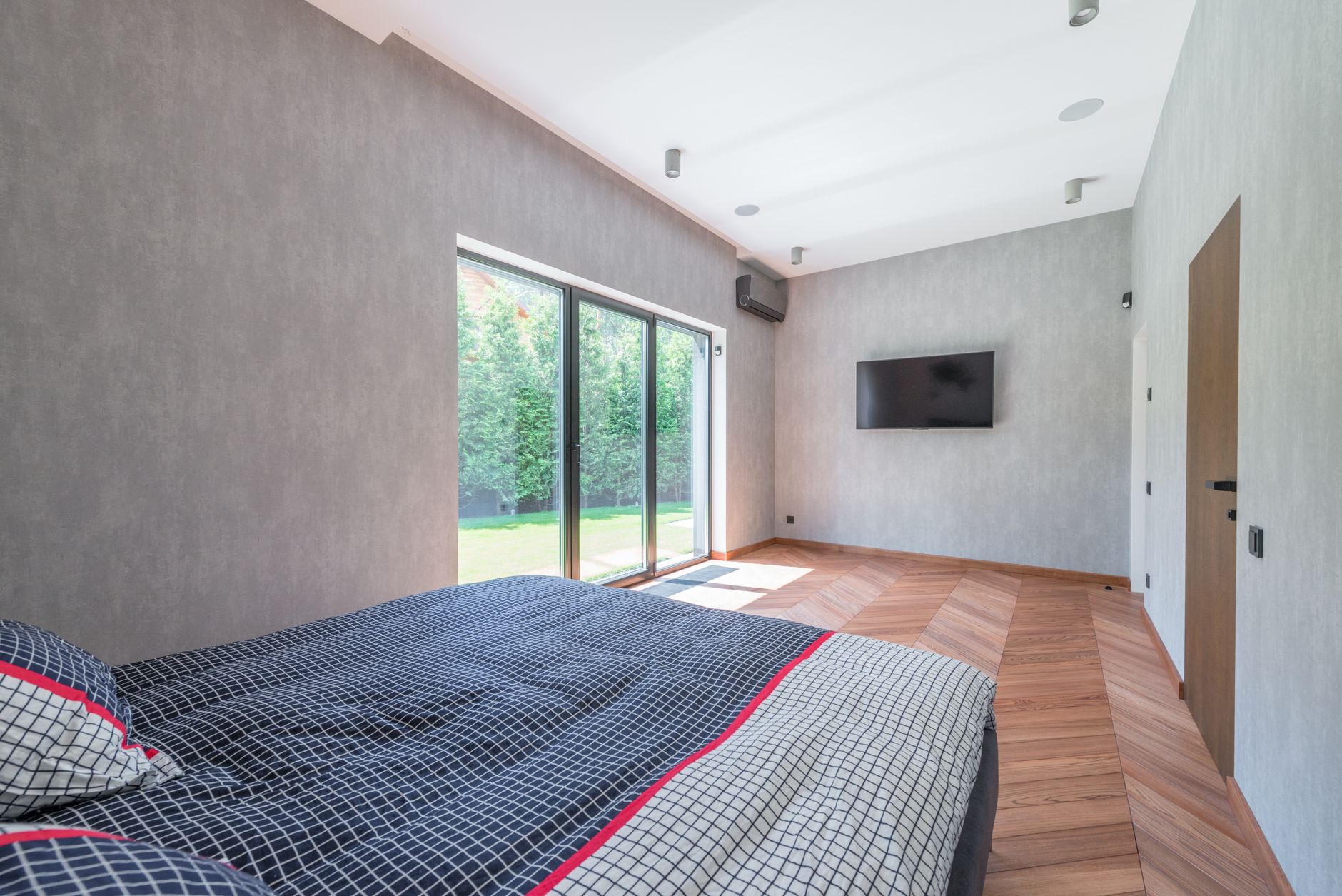
Are pivot doors suitable for bedrooms? In many custom homes, yes—but only when the opening, hardware, and privacy needs are planned together. A pivot interior door can give a bedroom entry a more architectural feel than a standard hinge door, but bedrooms also ask more of a door: quiet, dependable closure, comfortable circulation, and enough visual privacy for everyday use.
For homeowners, architects, and contractors comparing options, the real question is not whether a pivot door can fit a bedroom in theory. It is whether the door can work well in the room you actually have. If you are still comparing styles, the custom interior door catalog is a helpful place to browse options, and the blog can help you compare other residential door applications.
When a pivot door makes sense in a bedroom
Pivot doors are often chosen for bedroom entries when the design calls for a clean, modern look or when the opening is larger than a basic interior passage door. Because the pivot point is offset from the jamb, the door can feel visually lighter and more intentional, especially in contemporary suites and renovation projects with upgraded finishes.
They can also work well when the bedroom entry is part of a larger architectural composition. For example, a pivot door may help a primary suite doorway align with flush wall details, tall ceilings, or a simplified trim package. In those settings, the door becomes part of the room’s overall geometry rather than just a utility item.
Common reasons homeowners choose pivot doors
- They support a modern, high-end look.
- They can suit wider or taller custom openings.
- They create a different sense of movement than a standard swing door.
- They can coordinate with other architectural door systems in the home.
What to consider before ordering one
Privacy and sound
Bedrooms need more than visual separation. They also need a door that closes consistently and feels comfortable to use every day. A pivot door can provide privacy, but sound control depends on the complete assembly: door construction, frame detailing, seals, and the quality of the installation. If acoustic performance matters in a primary suite, ask for a clear discussion of how the chosen system is detailed, rather than assuming the pivot mechanism alone will solve the problem.
Swing clearance
Unlike a pocket door, a pivot door still uses floor space when it opens. That matters in bedrooms where a nightstand, dresser, wall sconce, or closet corner may be close to the entry. Before selecting the door, check the swing path from both sides and confirm that the door will not interfere with furniture placement or traffic flow.
Hardware and latching
The look of a pivot door is only part of the decision. The hardware must suit the size and weight of the door, and the latch style should match the way the bedroom will be used. Some homeowners prefer a more minimal handle set, while others want a more secure closing feel. The important point is that the hardware should be selected as part of the overall design, not added as an afterthought.
Floor and wall conditions
Bedroom remodels often reveal uneven floors, out-of-square openings, or wall finishes that affect door alignment. A pivot door can be less forgiving than a basic stock door if the opening is not properly assessed. That is why field verification matters before fabrication and why professional measurement is usually worth the extra step on a custom project.
Pivot doors vs. traditional swing doors for bedrooms
For many homes, a traditional swing door remains the simplest answer. It is familiar, typically easier to detail, and often better suited to tighter spaces. A pivot door, on the other hand, can be the better choice when design goals are driving the project and the opening can support the hardware and clearances.
| Factor | Pivot Door | Traditional Swing Door |
|---|---|---|
| Design impact | More architectural and modern | More conventional and understated |
| Space needs | Requires clear swing path | Also requires clearance, usually in a more familiar way |
| Best use | Custom bedrooms, suites, statement entries | Standard rooms, tight layouts, straightforward renovations |
| Installation planning | More exacting | Often simpler |
If your bedroom renovation is centered on a clean, contemporary finish, a pivot door may be worth the added planning. If the room is compact or the priority is pure practicality, a traditional swing door may still be the better fit.
How measurements shape the result
Custom pivot doors are not chosen by style alone. The opening height, width, wall thickness, floor finish, and adjacent trim details all affect whether the finished door will operate correctly. In a bedroom, even small layout changes can influence how the door feels when you enter the room, so measurements should be confirmed carefully before anything is ordered.
For renovation projects, it is especially important to evaluate the existing opening and determine whether the wall condition supports the intended door system. If you are comparing made-to-measure solutions, contact our team to discuss the opening, the room use, and the right door category for the project.
Where DAYORIS fits into the decision
For readers looking into a made-to-measure architectural solution, DAYORIS offers custom pivot door solutions that can be evaluated alongside your bedroom layout and design goals. That makes it easier to compare how the door will look, how it will move, and whether it suits the privacy needs of the room.
In practice, the best bedroom pivot door is the one that balances style with everyday use. When the opening is measured correctly, the hardware is chosen thoughtfully, and the room has enough clearance, a pivot door can be an elegant and practical choice for a bedroom, primary suite, or guest room that deserves a more refined entry.