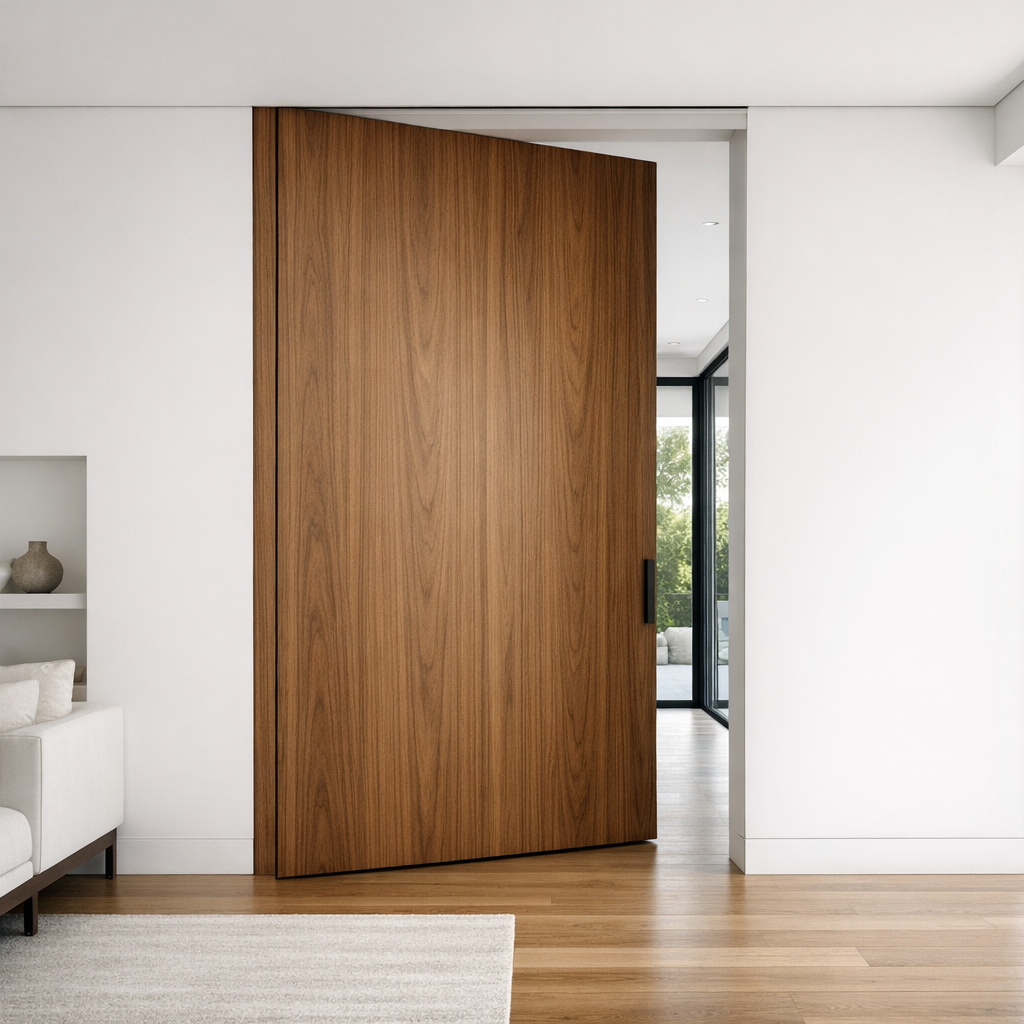
Integrating Interior Pivot Doors with Modern Minimalist Architecture: Balancing Space and Style
- November 5, 2026
- admin

Modern minimalist architecture emphasizes clean lines, open spaces, and a restrained palette, calling for design elements that are both functional and visually unobtrusive. Interior pivot doors have emerged as a sophisticated solution to meet these needs. Unlike traditional hinged doors, pivot doors rotate around a central axis, offering flexibility in design and spatial flow. This article explores how interior pivot doors can be integrated into minimalist architectural frameworks, enhancing both aesthetic appeal and practical function.
Minimalism thrives on simplicity and avoiding unnecessary ornamentation. Interior pivot doors align perfectly with these principles due to their streamlined mechanism and ability to create large, uninterrupted openings. Because pivot doors do not require door jambs or casings, they facilitate uninterrupted wall planes that are crucial to minimalist design. Additionally, pivot doors can be designed with flush surfaces and narrow reveals, helping maintain the clean silhouette that minimalist interiors demand.
One of the challenges in minimalist homes is maintaining a spacious feel without sacrificing privacy or function. Pivot doors help manage these competing demands by allowing for larger door panels that swing inward or outward without occupying excessive floor space. This flexibility makes them ideal for partitioning open-plan interiors or creating fluid transitions between living areas, home offices, and bedrooms.
The choice of materials for pivot doors directly influences how they complement minimalist interiors. Neutral, matte finishes in wood veneer, lacquer, or even metal can reinforce the serene simplicity of minimalist rooms. Glass pivot doors with minimal framing can preserve sightlines and daylight flow, supporting the openness critical to minimalist spaces.
Minimalist interiors often rely on subtle contrasts to avoid visual monotony. A pivot door finished in warm natural wood can add a tactile layer without breaking minimalism’s harmony. Conversely, black or dark metal pivot doors can introduce a graphic element that echoes architectural details or furniture accents. The key is choosing a pivot door finish and texture that either blends seamlessly or purposefully contrasts without overwhelming the understated aesthetic.
Installing pivot doors in minimalist architecture requires careful planning. The precise alignment of pivot hardware is essential to ensure smooth operation and avoid disrupting the door’s clean lines. Because minimalist spaces often utilize floor-to-ceiling doors, structural considerations such as floor flatness and ceiling heights become critical during installation.
Pivot door hardware can be minimalistic or concealed within the door structure to avoid visual clutter. Selecting hardware that complements the architectural intent—such as brushed metal or hidden pivots—enhances the door’s seamless look. Some systems allow adjustment to balance heavier doors, edge clearance, and opening angle, ensuring that form does not impair function.
Consider a contemporary American home where a large pivot door separates a minimalist kitchen and adjacent living area. The door’s pivot hinge is placed off-center, allowing a gentle swing that creates a broad opening to unify the spaces when desired. When closed, the pivot door doubles as a wall panel, its surface matching the surrounding cabinetry. This integration highlights how pivot doors can be both subtle architectural features and effective room dividers.
Architects and designers can find rich inspiration and technical resources regarding premium interior doors through specialized firms like DAYORIS. Their extensive portfolio showcases contemporary door designs that align with minimalist and other modern aesthetics, offering practical insight into material choices and door integration.
Interior pivot doors serve as versatile instruments for achieving minimalist design goals by marrying functionality with sculptural elegance. Their ability to maximize spatial utility and maintain visual coherence positions them as essential elements in contemporary architecture. As more homeowners and designers seek to create uncluttered yet dynamic interiors, pivot doors offer both subtlety and presence that few other door systems can match.
For further exploration of pivot doors’ design possibilities, visit Interior Pivot Door’s pivot door gallery or learn about the company’s design philosophy at their about page.