
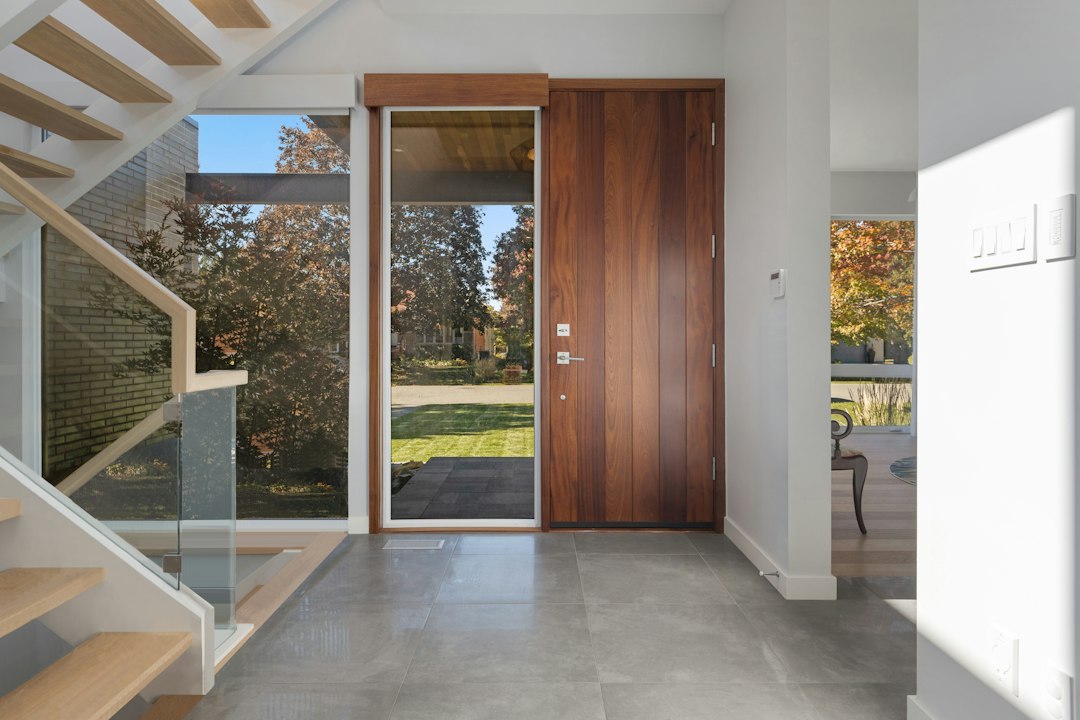
Ordering a custom pivot door is less about picking a dramatic slab and more about aligning the opening, hardware, and finished room conditions before fabrication. A pivot door can create a clean transition between spaces, but it performs well only when the measurements, swing path, and installation details are coordinated in advance. For homeowners, architects, and contractors comparing DAYORIS custom pivot door solutions, the main question is not whether the style looks good; it is what must be confirmed so the door fits, functions, and feels balanced in daily use.
Why a pivot door is different from a standard swing door
A pivot door rotates on a point set away from the edge of the slab rather than on conventional hinges. That change affects the way the door moves, the amount of wall clearance it needs, and the overall feel of the opening. Because the pivot point shifts the swing path, the door can look more architectural and deliberate, but it also demands more planning than a typical interior door.
In most projects, a pivot door should be treated as a custom system rather than a simple replacement slab. The opening, floor finish, ceiling height, and surrounding wall structure all influence whether the installation will be straightforward or complicated. If you are still comparing door styles, the custom door catalog is a useful place to review related options before narrowing the field.
What should be measured before you order?
Accurate measurements are the foundation of a successful custom pivot door. At minimum, confirm the finished opening width and height, the wall thickness, and the condition of the floor at the threshold. For a made-to-measure door, the numbers should reflect the completed room conditions, not just rough framing.
Measure the finished opening, not the rough framing
One of the most common mistakes is measuring too early, before drywall, flooring, or trim are complete. A pivot door should be sized to the actual finished opening because small changes in floor height or jamb build-out can alter clearances and alignment. If the space is still under construction, it is usually better to wait until the surrounding conditions are stable before finalizing the order.
Check the swing path and nearby obstructions
Because pivot doors swing differently than hinged doors, the path of travel deserves careful review. Look at nearby walls, switches, cabinetry, built-ins, and furniture placement. In tighter spaces, the door may technically fit the opening but still feel awkward if the swing path is interrupted. A contractor or door specialist can help determine whether the pivot placement will create a comfortable circulation path.
Review floor level and ceiling conditions
The floor needs to be level enough for the hardware and slab to operate properly, and the ceiling or header area must be suitable for the chosen pivot system. Uneven floors can affect the reveal around the door, while a weak or poorly planned header can create installation problems. In remodels, this is one reason a site review is so valuable before fabrication begins.
Hardware and installation details that affect performance
The visible design of a pivot door gets attention, but the hardware is what determines whether it opens smoothly and stays aligned over time. The pivot point, concealed components, and any hold-open or closing function must all be selected to match the door size and weight. That is why pivot doors are best treated as coordinated systems rather than standalone slabs.
For architects and contractors, coordination should also include the wall structure around the opening. Some projects may need reinforcement, especially when the door is oversized or the surrounding assembly is complex. The installer should also confirm how the door will be anchored and how the final reveal will be maintained once the room is finished.
It also helps to decide early whether the door should read as fully flush, lightly framed, or more architectural against the surrounding wall. Those details affect not only the appearance, but also how the opening performs in real life. A carefully planned pivot door should feel precise, not forced.
How do material and finish choices affect the final result?
A custom pivot door is often selected because the homeowner wants a strong visual statement, but the finish still has to work for the room. Veneer, lacquer, and other premium finishes can each create a different effect, and the right choice depends on traffic, moisture exposure, and the surrounding millwork. If the door is going into a bedroom suite, office, or hallway, consistency with the rest of the interior is often just as important as appearance.
Maintenance is worth thinking about as well. Some finishes hide fingerprints and everyday wear better than others, which can matter on a door that is used frequently. A busy family home may benefit from a finish that is easier to maintain, while a more formal space may prioritize visual depth and material character.
Where does a custom pivot door make the most sense?
Pivot doors are especially effective when the opening needs more presence than a standard swing door can provide. They work well for private offices, primary suites, media rooms, and other interior areas where the door should feel architectural without becoming visually heavy. They can also be useful in wider openings where balanced movement and a cleaner look are priorities.
That said, not every room is an ideal candidate. In very compact hallways or spaces with tight furniture layouts, the swing path may become the limiting factor. The best projects are the ones where the door is chosen to solve a real spatial need, not just to add a modern feature.
A simple pre-order checklist
Before placing an order, it helps to gather a few essentials so the design team and installer can evaluate the opening with fewer surprises.
- Confirm the finished opening dimensions, not only the rough framing.
- Identify any nearby walls, built-ins, or fixtures that could interrupt the swing path.
- Verify that the floor, header, and wall structure are ready for the chosen hardware.
- Select the finish and visual profile with the room’s other materials in mind.
- Ask early whether the project calls for reinforcement or special coordination during installation.
Those basics may sound simple, but they are often what separates a smooth project from one that needs redesign later. The more complete the information is before fabrication, the easier it is to achieve a door that opens cleanly and looks intentional in the finished space.
If you are planning a project and want to see how a pivot door can be tailored to a specific opening, review DAYORIS custom interior pivot doors and compare them with the rest of the made-to-measure options available through our team. A well-planned pivot door should feel effortless in daily use and visually integrated with the rest of the interior, which is exactly why the measurements, hardware, and finish decisions are worth getting right before the order is placed.