
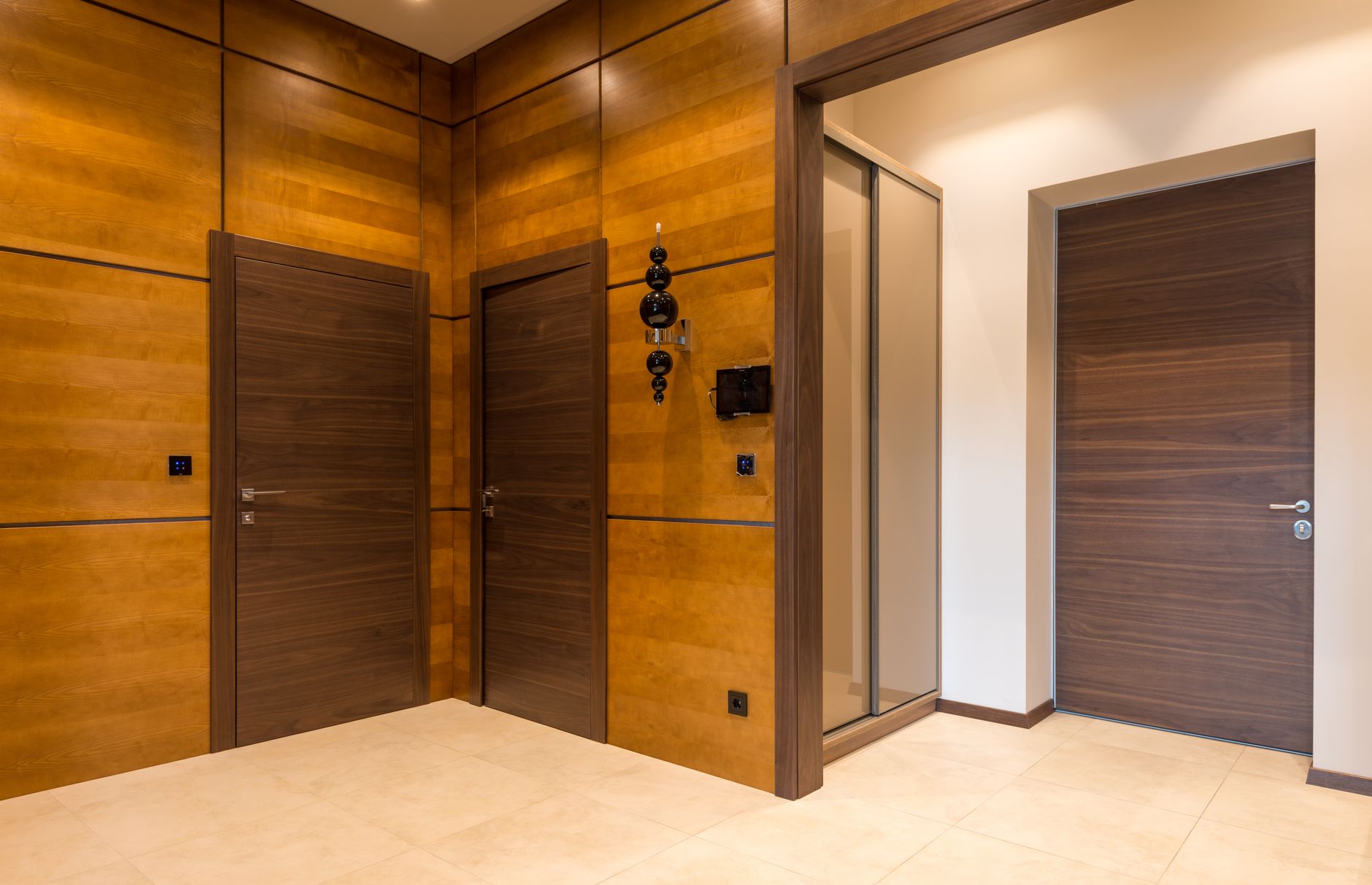
Custom pivot interior door planning starts with one simple question: will the opening, hardware, and wall conditions support the way the door moves? Unlike a standard hinged door, a pivot door rotates on offset hardware, so the project depends on more than just width and height. If you are considering a custom pivot interior door for a hallway, suite entry, office, or luxury renovation, the real task is matching the door to the room, the trim, and the circulation path.
Why pivot doors are different from standard swing doors
Pivot doors open on a point set away from the edge of the slab, which changes the way the door feels and the amount of space it uses. That offset can create a more architectural look, but it also means the door does not behave like a typical side-hinged slab. The opening path, handle placement, latch location, and reveal all need to be planned together.
This is why many homeowners and design professionals compare pivot systems with other made-to-measure options before they choose a final layout. If you are still exploring the broader category, the custom interior door catalog is a practical place to review related configurations and see how different door types solve different spacing problems.
Measure the opening carefully before you choose the door
Start with the finished opening, not the rough framing
For renovation work, the finished opening is the number that matters most. Measure the clear width and clear height after flooring, trim, and wall finishes are accounted for. A door that looks perfect on paper can fail in the field if the finished dimensions leave too little room for the slab, the hardware, or the desired visual reveal.
Check the swing path and nearby obstructions
Pivot doors need enough clearance to move without hitting adjacent walls, cabinetry, light switches, or built-ins. Pay attention to baseboards, flooring transitions, and return walls. Even small obstructions can affect the door’s motion or create a tight feel in an otherwise beautiful opening. In a compact room, a professional should confirm whether the pivot point and opening direction make sense before anything is ordered.
Choose hardware early in the process
With a pivot door, hardware is not a last-minute detail. It influences how the door opens, closes, and aligns with the surrounding architecture. The pivot system, the latch or lockset, and the handle style all need to work together. Because the hardware sits differently than on a conventional door, it can also affect the visual balance of the slab and the final spacing at the top, bottom, and sides.
For that reason, architects and contractors often coordinate the hardware choice before finalizing finishes. Doing so helps avoid the common problem of discovering too late that the door style, weight, or intended room use does not fit the hardware package being specified.
Material and finish decisions matter more than most buyers expect
The surface finish of a pivot door is not just a design choice. It affects how the door reads in natural light, how it coordinates with surrounding millwork, and how well it hides or highlights the door’s scale. A darker finish can emphasize the monolithic look many buyers want, while a lighter or wood-grain surface can soften a large opening.
When comparing options, think about the room’s use. A primary suite door may call for a quieter visual effect, while an office or statement entry into a public-facing area may benefit from a bolder material expression. If you are focusing on material and finish combinations rather than just the form of the door, DAYORIS custom interior pivot doors are a relevant reference point for understanding how a made-to-measure pivot system can support a modern interior concept.
Where a custom pivot interior door works best
Pivot doors are especially compelling where you want the opening to feel intentional, wide, and architectural. They can work well for primary bedroom entries, private offices, dressing rooms, and other spaces where a standard door would feel visually too ordinary. In a renovation, they are also useful when the goal is to make a transition feel more custom without changing the entire floor plan.
That said, pivot doors are not the automatic answer for every room. If the opening is tight, if furniture crowds the area, or if the wall layout leaves little room for movement, a different system may be more practical. The best result comes from balancing aesthetics with daily use, especially in homes where the door will open many times a day.
Common mistakes to avoid before ordering
One of the most common errors is assuming a pivot door can be selected by style alone. Buyers sometimes focus on the finish and forget about clearances, wall conditions, hardware placement, and room function. Another mistake is measuring only the rough opening and not the completed wall condition. In renovation work, that omission can create delays or force design changes after the fact.
A third mistake is choosing the door before deciding how it should behave in the room. Should it feel substantial or light? Should it blend into the wall or stand out as an architectural feature? Answering those questions early makes it easier to choose the right size, proportions, and finish. If you want to discuss a project with a specialist, you can also contact Custom Made Interior Doors for guidance on how to approach the selection process.
How to evaluate a pivot door project with confidence
The simplest way to evaluate a pivot door is to think in three layers: the opening, the movement, and the finish. First, confirm that the finished dimensions support the slab you want. Second, make sure the hardware and swing path suit the room. Third, choose a finish that works with the architecture instead of competing with it. When those pieces align, a pivot door feels seamless rather than forced.
If you are planning a renovation or specifying doors for a new build, the most useful next step is to compare the room requirements with the available system options. A well-planned pivot door can add a strong architectural presence without sacrificing function, and that balance is what makes the project worth getting right from the start.