
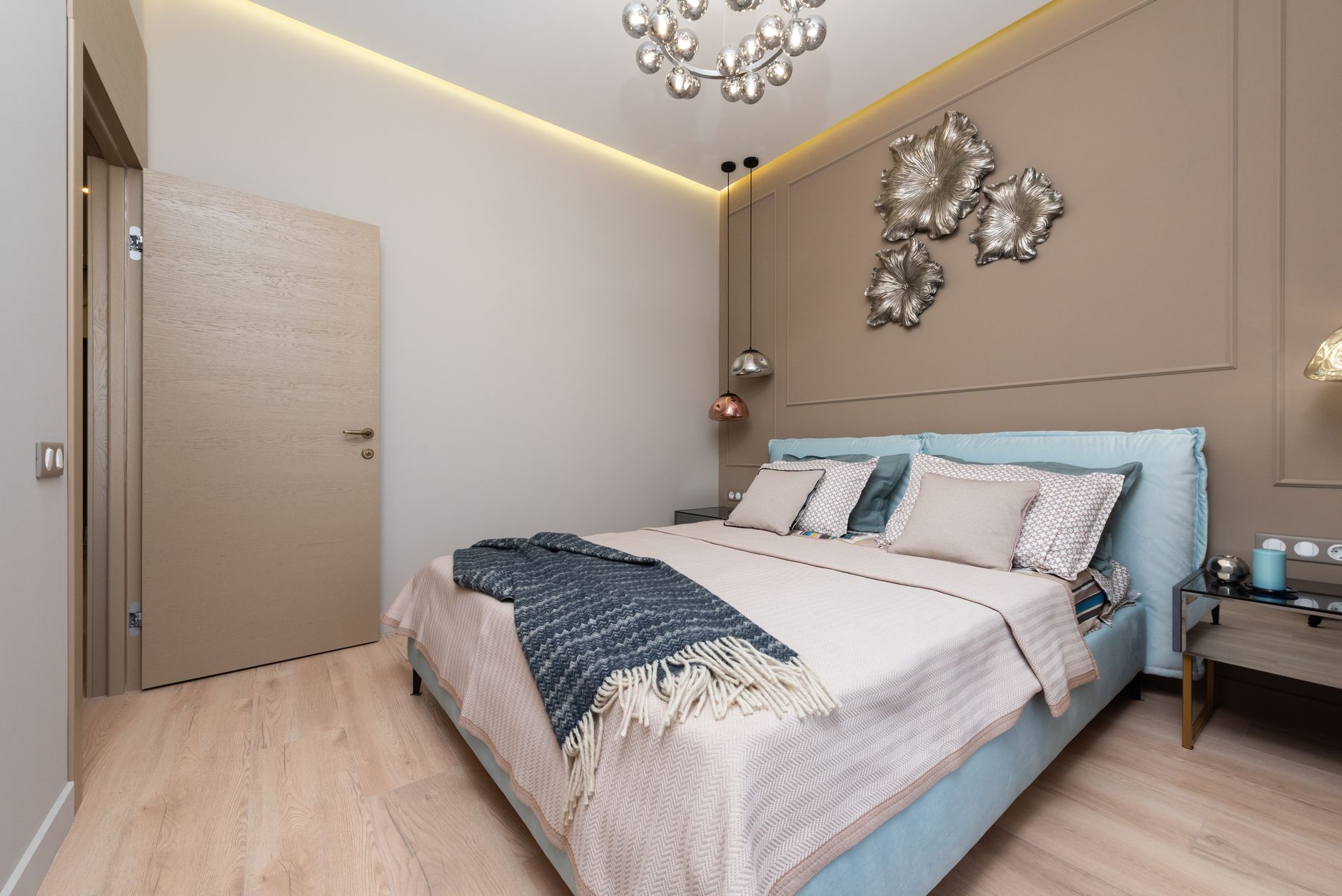
Pivot doors are often associated with dramatic entries, but they can also work well in bedrooms when the room layout, privacy needs, and hardware details are planned correctly. The short answer is yes: a pivot door can be a strong choice for a bedroom if you want a cleaner architectural look and the opening is designed with everyday use in mind.
For homeowners, architects, and contractors comparing made-to-measure options, it helps to study a dedicated product family such as DAYORIS custom interior pivot doors and then compare them with other solutions in the Custom Made Interior Doors catalog. That gives you a practical starting point for understanding when a pivot system is appropriate and when another door type may be easier to live with.
Why pivot doors can work well in bedrooms
A pivot door opens on a pivot point rather than on traditional side hinges. That difference changes both the appearance and the way the door moves. Visually, the result is often more minimal and architectural, which can be appealing in a primary suite or a modern bedroom where the doorway is part of the design statement.
Privacy and daily use
Bedroom doors need to do more than look good. They should support privacy, feel comfortable to use, and close in a reliable way. A pivot door can meet those goals, but only when the system is specified with the room in mind. If the door will be used frequently, it should feel smooth, stable, and easy to open from both sides.
Unlike a standard swing door, a pivot door may not communicate the same familiar feel to every user. That is not a drawback on its own, but it does mean the project should account for who will use the room, how often the door will be opened, and whether the opening needs to be especially intuitive for children, guests, or aging family members.
Visual proportion matters
Pivot doors are often chosen because they can support larger or more dramatic proportions. In a bedroom, that can be an advantage if the goal is to make the doorway feel integrated with surrounding wall surfaces rather than treated as a basic passage opening. In a suite with taller ceilings or a more refined wall design, the door can help complete the architecture instead of interrupting it.
At the same time, the scale should feel appropriate to the room. A pivot door that is oversized for the space can make a bedroom feel awkward, while a carefully proportioned one can make the room feel calm and intentional.
When a pivot door is a smart bedroom choice
Pivot doors are especially worth considering in bedrooms when the project has one or more of these conditions:
- The bedroom entry is part of a primary suite or a more elevated residential renovation.
- The doorway needs a modern, flush, or highly architectural appearance.
- The opening is wide enough that a conventional hinge layout feels less refined or less balanced.
- The homeowner wants the bedroom door to coordinate with other custom interior doors in the home.
In these situations, the pivot mechanism can be less about novelty and more about solving a design problem. The key is to make sure the door fits the room instead of forcing the room to adapt to the door.
What to check before specifying one
Before choosing a pivot door for a bedroom, the opening should be reviewed carefully. The finished floor, wall conditions, trim decisions, and surrounding furniture all matter. A pivot system may be a beautiful choice, but it still needs a practical path of travel and the right clearances to function comfortably.
Clearance and traffic flow
One of the first questions to ask is how the door will move through the room. Even though pivot doors can feel space-efficient in some layouts, they still need room to operate cleanly. Nearby nightstands, closets, light switches, and circulation paths should all be considered early in the design process.
Ask about wall conditions
If you are renovating an existing home, wall conditions can influence how easily a pivot door is integrated. The opening may need additional assessment if the surrounding structure is not straightforward or if the project involves a change from a standard hinge door to a more architectural system. A qualified installer or designer should evaluate the opening before finalizing measurements.
Sound and privacy expectations
Bedroom use usually raises the question of sound control. A pivot door can support privacy, but it should not automatically be assumed to perform like every other door type. Construction, fit, and installation details all influence how well a bedroom door blocks noise and light. If acoustic comfort is a major concern, that should be discussed before the door is ordered.
The same is true for the closing feel. Some bedrooms need a very quiet, controlled closure, while others simply need a door that feels substantial and dependable. Either way, the hardware and assembly should be selected with the room’s daily routine in mind.
Pivot doors vs. swing doors for bedrooms
For many homeowners, the real question is not whether a pivot door can work, but whether it is better than a traditional swing door. A swing door is familiar, easy to understand, and often the simplest choice for a private room. A pivot door, by contrast, is often selected when the doorway is intended to feel more architectural and less conventional.
If the bedroom is part of a minimalist renovation, a luxury primary suite, or a home where clean lines matter more than traditional trim, a pivot door can be a better visual fit. If the priority is straightforward function above all else, a standard swing door may be the more practical option. Both can work well; the right choice depends on the room, the user, and the design goal.
Selecting materials and finishes
Finish selection is just as important as the door system itself. A bedroom pivot door should feel connected to the rest of the interior, whether that means a warm wood tone, a painted surface, or another refined finish. The best choice depends on how much contrast you want, how much maintenance you are comfortable with, and how the door will relate to the adjacent wall surfaces.
For a more seamless look, many projects lean toward flush surfaces or restrained finishes that let the architecture speak for itself. In a warmer or more traditional setting, a richer material choice may be more appropriate. The point is not to chase a trend; it is to choose a finish that supports the room’s overall experience.
If you are comparing systems for a renovation or new build, a good next step is to review the available product families, confirm the opening conditions, and speak with a specialist about the bedroom’s specific requirements. Explore DAYORIS custom interior door applications and then use the contact page to discuss your project details. With the right planning, a pivot door can be a refined and practical choice for a bedroom rather than just a design statement.