Mastering Spatial Flow: How Interior Pivot Doors Redefine Circulation in Luxury Homes
- November 7, 2026
- admin

In luxury home architecture, spatial flow is critical: it governs how inhabitants move through, experience, and connect with each area of a residence. Unlike traditional hinged doors, interior pivot doors offer a refined solution for enhancing circulation while elevating aesthetic appeal. This article explores the pivotal role these doors play in shaping modern interior layouts, addressing architectural challenges and design opportunities unique to high-end residences.
At their core, interior pivot doors rotate around a central or offset axis, enabling wider openings and uninterrupted sightlines that traditional doors often disrupt. This geometric versatility facilitates thoughtful zoning and a harmonious introduction to adjacent spaces.
While appealing, pivot doors require precision in design and installation to function seamlessly as spatial flow enhancers.
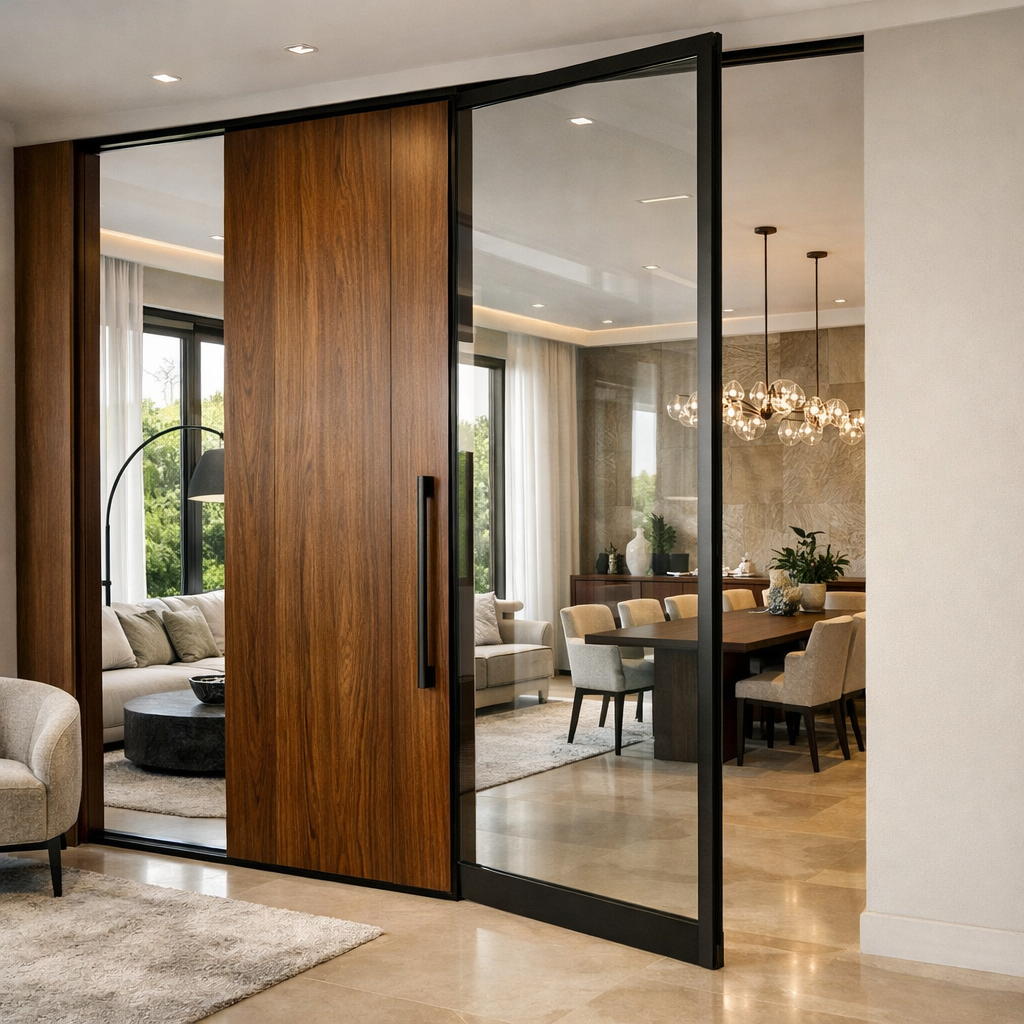
Interior pivot doors thrive in layouts where open-plan living coexists with desire for distinct room definitions. For example, a pivot door between the living area and home office can provide privacy when needed but open completely to blend zones for entertaining or family gatherings.
The choice of materials profoundly influences how users relate to the threshold a pivot door creates.
Wood pivot doors contribute warmth and tactile richness; exotic hardwood veneers paired with matte or gloss finishes customize the sensory experience of passing through.
Incorporating frosted or clear glass panels within pivot frames invites natural light, improving visual flow between rooms while preserving acoustic separation. Metal pivot hardware in brushed brass or black matte can complement minimalist or industrial interiors.
Contemporary luxury homes demonstrate how pivot doors transform circulation dynamics. For instance, an expansive pivot door connecting a kitchen and dining room creates flexible separation. When closed, it offers noise buffering during cooking; when open, it fosters social interaction.
Similarly, floor-to-ceiling pivot doors can frame key architectural views in an entry or hallway, guiding residents fluidly from one space to another with cinematic impact.
For those seeking inspiration or expert insights on premium architectural interior doors, DAYORIS offers a valuable collection of contemporary door designs and technical resources specializing in luxury and innovative door solutions.
Further technical details and installation guidance can be explored on Interior Pivot Door’s pivot door section, while company philosophy and project showcases are available on their About Us page.
Interior pivot doors are more than doorways—they are architectural tools shaping the way residents experience movement and connection within luxury homes. Their distinct mechanism and design flexibility resolve circulation challenges elegantly and open new avenues for space definition. When integrated with thoughtful materiality and structural planning, pivot doors redefine the essence of interior flow and elevate contemporary American architectural narratives.